Design Custom Labels with 1.3oz Chip Can SVG Templates
Creating professional packaging for small-batch products often feels like a barrier to entry for independent creators. You have the recipe, the vision, and the drive, but finding a label that fits a specific container—like a standard 1.3oz chip can—usually requires expensive custom die-cuts or complex graphic design knowledge. That is exactly why having a reliable set of 1.3oz Chip Can Label Set SVG Templates changes the game. It bridges the gap between a homemade aesthetic and a polished, market-ready product, allowing you to focus on the branding rather than the measurements.
When you are working with unique container sizes, precision is everything. A label that bunches up, peels at the edges, or doesn't wrap correctly can instantly cheapen a high-quality product inside. These templates are engineered specifically for the geometry of a 1.3oz can, ensuring that your design sits flush and professional. Whether you are packaging gourmet spices, cosmetic balms, or artisanal coffee blends, the structural integrity of the label is the foundation of your visual presentation. This isn't just about sticking a sticker on a can; it is about creating a seamless skin that communicates quality before the customer even opens the lid.
The Power of Versatile Design Assets
One of the most significant advantages of this specific set is the sheer breadth of file compatibility. In the world of design, workflow bottlenecks happen when file formats don't match software capabilities. By providing six distinct formats—SVG, PNG, DXF, PDF, PSD, and a Canva link—this set eliminates friction. If you are a Cricut user running a small production line from your kitchen table, the SVG files ensure clean vector cuts without pixelation. If you are a Photoshop pro handling high-end retouching for a client catalog, the PSD files give you the layer control you need.
This versatility makes the 1.3oz Chip Can Label Set SVG Templates a robust addition to any creative’s library of design assets. It acknowledges that modern creators often switch between environments. You might start a concept in Canva on a tablet during a commute, move to Adobe Illustrator for fine-tuning on a desktop, and then send a DXF file to a cutting machine. This adaptability is crucial for maintaining momentum in fast-paced projects, particularly for entrepreneurs who wear multiple hats and need tools that keep up with their pace.
Visual Identity and Brand Perception
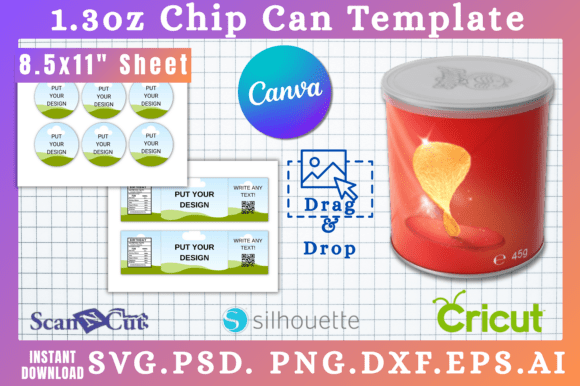
A label is more than just a wrapper; it is a silent ambassador for your brand. The layout, typography, and color palette you apply to these templates will dictate how consumers perceive your product's value. Because the template provides a blank canvas on a 9.3"x8.2" sheet, you have the real estate to make bold decisions. You can experiment with modern typography, pairing a clean sans serif font for the ingredient list with a bold display font for the product name. This contrast creates a visual hierarchy that guides the shopper's eye exactly where you want it.
Consider the psychology of your design choices. A minimalist approach using ample white space and a single accent color can convey sophistication and purity—ideal for organic skincare or high-end supplements. Conversely, a dense, textured background with a handwritten font can evoke warmth and tradition, perfect for family recipe spices. The template itself remains neutral, allowing your brand identity to take center stage. It ensures that whether you are aiming for a rustic, artisanal vibe or a sleek, futuristic look, the physical application of the design remains consistent and professional.
Practical Application for Small Business Owners
For small business owners, time is a finite resource. The "Instant Download" feature of these templates is not just a convenience; it is a logistical advantage. When a sudden order comes in or a holiday rush approaches, you cannot afford to wait for shipping or spend hours troubleshooting file conversions. You need to download, design, and print or cut immediately. This efficiency allows you to scale your production without compromising on the bespoke feel of your packaging.
Furthermore, the ability to edit directly in Canva democratizes the design process. You do not need to be a graphic designer to produce professional results. Canva’s drag-and-drop interface, combined with these pre-sized templates, allows you to upload your logo, select your brand colors, and type in your product details with ease. This accessibility is vital for startups that may not have the budget to hire a professional designer for every new SKU they launch. It empowers you to test new products in the market quickly and iterate on your design based on customer feedback.
Ensuring Readability and Compliance
While aesthetics are important, the functional aspect of a label—communication—cannot be overlooked. Packaging design often requires fitting a significant amount of information into a small space: ingredients, net weight, allergen warnings, and company contact info. The 1.3oz format is compact, which means your typography choices are critical. You need to ensure that your chosen typeface remains legible at small point sizes. A complex script font might look beautiful for the headline, but it will become an unreadable mess for the fine print.
This is where testing your font pairings becomes essential. Use the template to mock up your design and print a test version at actual size. Hold the physical can in your hand and check the readability in different lighting conditions. Does the contrast between the text and background hold up? Are the kerning and leading adjusted correctly so the text doesn't feel cramped? The templates provide the structure, but your attention to these typographic details ensures the final product is not just beautiful, but functional and compliant with labeling standards.
Expanding Beyond the Can
While the primary function is to fit the 1.3oz can, creative professionals often find secondary uses for these design assets. The dimensions of the label can inspire other elements of your branding suite. You can adapt the layout for hang tags, social media graphics, or website banners to create a cohesive brand identity across all touchpoints. The consistency in design language—using the same color codes, fonts, and graphic motifs—builds brand recognition.
Imagine unboxing a product where the can label matches the tissue paper, the thank you card, and the Instagram story announcing the new arrival. That level of cohesion signals professionalism and care. It tells your customer that you view your brand as an ecosystem, not just a single product. By investing in high-quality templates like these, you are laying the groundwork for a scalable brand architecture that can grow with your business. Whether you are selling at a local farmers' market or shipping nationwide, this visual consistency builds trust and loyalty.
Final Thoughts on Production Quality
Ultimately, the success of your packaging relies on the quality of the materials you pair with the design. A high-resolution digital file is only as good as the paper or vinyl it is printed on. When using these templates, take the time to source label stock that is appropriate for your product's environment. If the cans will be refrigerated, ensure you use waterproof adhesive. If they will be stacked on shelves, consider a matte finish to reduce glare and improve readability.
The 1.3oz Chip Can Label Set SVG Templates provide the digital foundation, but the tactile experience of your product is what seals the deal. By combining these precise, easy-to-use templates with thoughtful typography and high-quality printing, you elevate your product from a simple container to a memorable brand experience. It is an investment in the details that your customers will notice and appreciate every time they reach for your product.