Streamline Your Brand with Jewelry Card Holder Templates
As a designer or small business owner, you know that packaging is more than just a protective shell; it is the first tactile experience a customer has with your brand. In the jewelry market, where perception of value is everything, the presentation of your product can often outweigh the product itself. However, creating professional-grade packaging from scratch is time-consuming and expensive. This is where the utility of high-quality design assets becomes undeniable. We are focusing today on a specific solution that bridges the gap between amateur crafting and professional retail: Jewelry Card Holder Templates.
It is vital to understand the nature of this product. THIS IS A DIGITAL ITEM. NO PHYSICAL ITEM WILL BE SHIPPED TO YOUR HOME. This distinction is actually the primary benefit. You are not waiting for a box of pre-printed cards that might have a typo or an outdated logo. Instead, you are purchasing the ability to produce infinite iterations of your packaging instantly. This is the ultimate time-saver for small business owners, crafters, and busy designers who need agility in their workflow. Instead of a static image, you are receiving a fully functional framework designed for ease and flexibility.
The Anatomy of a Professional Packaging Workflow
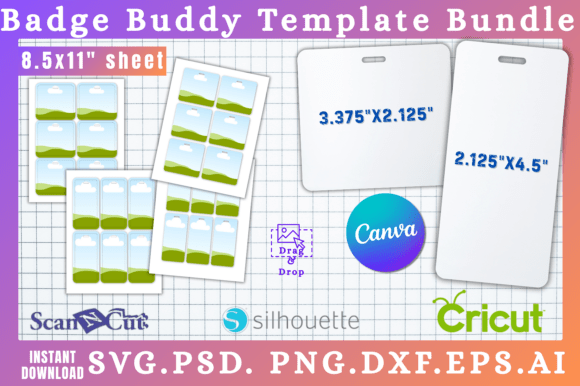
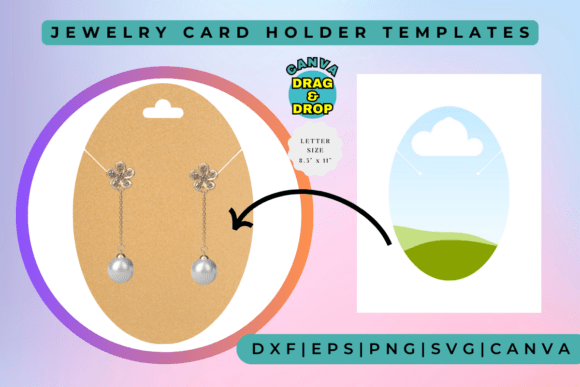
The true value of these Jewelry Card Holder Templates lies in their versatility across different software ecosystems. When you download this package, you are not locked into a single, expensive program. The delivery includes a Canva link for those who prefer a browser-based, drag-and-drop interface, making it accessible even if you have no background in complex vector software. For the more technically inclined, the inclusion of SVG, DXF, EPS, and PNG files ensures compatibility with professional industry standards. Whether you are using a Cricut or Silhouette machine for die-cutting, or Adobe Illustrator for high-end vector manipulation, these files are ready to go.
Consider the workflow for a typical earring seller. Previously, you might have designed a card in a word processor, printed it on cardstock, and manually cut it out. The result was often inconsistent. With a structured template, you define your brand identity once. You customize the colors to match your specific hex codes, upload your logo design, and adjust the typography. Because the files are editable vectors, you maintain crisp lines whether you are printing at home or sending the files to a professional offset printer. This consistency is a cornerstone of modern brand strategy.
Visual Consistency and Brand Perception
When a customer receives a piece of jewelry on a flimsy, poorly aligned card, it cheapens the perceived value of the metal and stones. Conversely, a sturdy, well-designed card holder suggests care, attention to detail, and professionalism. These templates act as a foundation for your visual hierarchy. By using the provided layouts, you ensure that the product name, care instructions, and contact information are placed where the eye naturally expects them.
Furthermore, the aesthetic appeal of the template is designed to be neutral enough to adapt to various styles—minimalist, bohemian, luxury, or playful—while maintaining a structural integrity that looks "finished." This is not just about graphic design; it is about psychology. When your packaging looks uniform and intentional, it reinforces brand recognition. A customer who buys a necklace from you at a craft fair should have the same visual experience as a customer who buys online. These design assets make that synchronization possible without requiring a dedicated design team.
Practical Application for Crafters and Entrepreneurs
For the hobbyist who sells occasionally, the benefit is speed. You do not need to learn the intricacies of modern typography or layout rules from scratch. The template has already solved the spatial problems. You simply inject your personality into the pre-defined spaces. For the busy entrepreneur, the benefit is scalability. As your inventory grows, you can rapidly produce new card designs for new collections without starting from a blank canvas every time.
Imagine you are launching a seasonal holiday collection. Instead of commissioning a designer, you can open the Canva file, swap the background color to a festive hue, change the text to "Holiday Special," and have print-ready files in minutes. This agility allows you to react to market trends faster than competitors who are stuck in rigid production cycles.
Key Features of the Digital Download
Understanding exactly what you are receiving helps maximize the utility of the purchase. The package is curated to cover every possible production method available to modern makers.
- CANVA Link: Perfect for quick edits on the fly. This is the entry point for those who prefer a user-friendly interface for web design and layout.
- SVG Format: The gold standard for cutting machines. If you use a Cricut or Silhouette, this file ensures your machine cuts the outline of the card holder perfectly.
- DXF Format: Essential for users of the Silhouette Studio Basic Edition, ensuring that you don't need to upgrade your machine's software to use the file.
- PNG File: A high-resolution image with a transparent background. This is incredibly useful for social media graphics or mockups where you want to show the card holder without a white box around it.
- EPS File: The professional standard. If you are working with a print shop or need to do complex vector manipulation in Adobe Illustrator, this is the file you will use.
Integration with Broader Marketing Materials
A jewelry card is rarely a standalone item. It is part of a larger ecosystem that might include business cards, thank-you notes, and website visuals. By using a template system, you can ensure that the typography and spacing on your packaging match your other marketing materials. For instance, if your website uses a specific sans serif font for headers, you can easily apply that to the template in Canva or Illustrator. This cohesion turns a simple transaction into a memorable brand experience.
Additionally, the flexibility of these files supports various commercial projects. While designed for jewelry, the structural integrity of the card holder makes it adaptable for other small goods like enamel pins, patches, or even small stationery items. The ability to resize and edit the vectors means the template is not a one-trick pony; it is a versatile component of your design toolkit.
Final Thoughts on Efficiency and Quality
In the creative industry, time is the most expensive commodity. Every hour spent struggling with alignment and layout is an hour not spent on product development or customer service. By leveraging pre-structured Jewelry Card Holder Templates, you are effectively outsourcing the technical heavy lifting to a proven system. You retain full creative control over the aesthetic output—choosing your own color palette, imagery, and copy—but you bypass the frustration of building the architecture from scratch.
This is a practical, grounded approach to design. It acknowledges that while we all want beautiful packaging, we also need to be efficient and profitable. Whether you are a seasoned designer looking for a quick base to modify or a new entrepreneur trying to establish a professional look, these templates provide the necessary bridge between idea and execution. Get your instant download today and transform your design process into a streamlined, professional operation.