Transform Your Tarot Practice with a Customizable Guidebook
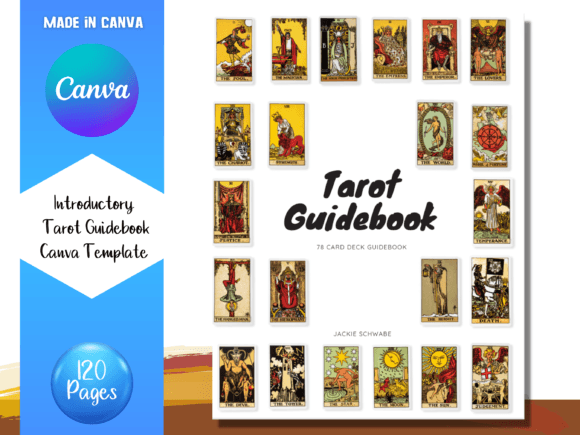
There is a specific moment in every Tarot enthusiast's journey where the desire to organize their knowledge becomes overwhelming. You move from simply shuffling cards to wanting to document your interpretations, track your spreads, and perhaps even create a guidebook for your clients or community. The challenge has always been the barrier to entry: designing a 120-page layout from scratch requires significant technical skill, time, and design assets. This is where the utility of a high-quality 120-Page Tarot Guidebook Canva Templates becomes undeniable. It serves not just as a file, but as a foundational design strategy for your entire Tarot practice.
The Anatomy of a Professional Tarot Guidebook
When you open a comprehensive template like this, you aren't just seeing pages; you are seeing a structured narrative. The strength of the 120-Page Tarot Guidebook Canva Templates lies in its logical flow, which mirrors the traditional learning curve of the Tarot. It typically begins with the history and structure of the deck, moves into preparation rituals like cleansing and consecrating, and then dives into the heavy lifting: the 78 card descriptions.
From a design perspective, this structure is vital for readability. In editorial design, information hierarchy is everything. A good guidebook template utilizes a clean typeface system—usually a blend of a readable serif font for body text and a distinct display font for headers—to separate Major Arcana from Minor Arcana, or upright meanings from reversed ones. This isn't just about looking good; it’s about visual hierarchy that allows a reader to flip to a specific card and instantly parse the information without feeling overwhelmed.
Visual Style and Brand Identity
For the entrepreneur or content creator, the aesthetic of your guidebook is a direct reflection of your brand identity. The default styling of these templates often leans into a mystical yet modern aesthetic—think ample white space, balanced margins, and intuitive iconography for suits like Cups, Wands, Swords, and Pentacles. However, the real value is in the customization.
Because this is a Canva-based template, it acts as a neutral canvas. If your brand personality is dark and moody, you can swap the color palette in minutes. If your brand is more bohemian and earthy, you can adjust the textures. This flexibility allows you to maintain brand consistency across your digital products. Whether you are a blogger offering a downloadable PDF or a practitioner creating a physical print run, the template ensures your typography and layout remain professional. It removes the guesswork of font pairing, providing a pre-tested system that ensures your headings complement your body copy without clashing.
Practical Applications: Beyond the Digital Download
The versatility of the 120-Page Tarot Guidebook Canva Templates extends far beyond a simple PDF for your iPad. Consider the small business owner who wants to create packaging design inserts for a physical Tarot deck. The template provides the exact page dimensions and print-ready formatting needed to produce a professional booklet.
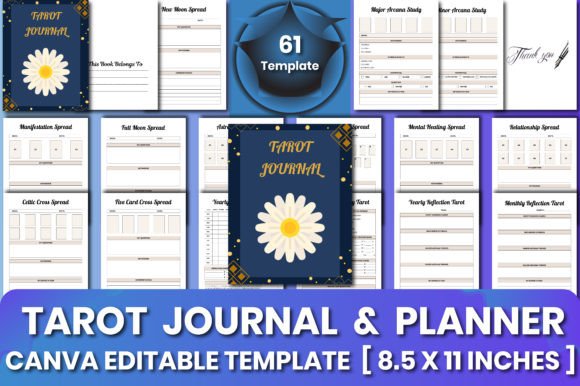
Furthermore, the content modules included—such as the 10+ unique spreads and sample questions—are excellent resources for social media graphics. You can isolate a single spread diagram, resize it, and use it as an Instagram carousel or a Pinterest pin. This turns your guidebook into a content engine. By using a premium font included or suggested within the template ecosystem, you ensure that your digital presence looks distinct from competitors using standard system fonts. It’s about leveraging design assets to create a cohesive ecosystem for your Tarot business.
Designing for Clarity and Engagement
One of the most overlooked aspects of Tarot guidebooks is the relationship between text density and user engagement. A common mistake in DIY design is cramming too much text onto a page, resulting in a wall of words that discourages reading. A well-designed template solves this by using grids and columns.
When evaluating a template, pay attention to the readability. Is the line spacing (leading) comfortable for long reading sessions? Does the template utilize pull quotes or sidebars to break up the definitions of the 78 cards? These are the subtle touches of modern typography that make a product feel premium. Whether you are using a sans serif font for a clean, minimalist look or a script font for a more mystical vibe, the legibility of the text is paramount. The goal is to create a guide that people actually want to use, not just one that looks pretty on a shelf.
Maximizing Your Investment
For the designer or marketer, a template is a time-saver, but for the hobbyist, it is a lifesaver. When you acquire a 120-Page Tarot Guidebook Canva Templates, you are essentially acquiring a masterclass in layout design. You can study how the pages are constructed. Look at how the images are framed. Observe the spacing between the text blocks.
To get the most out of this asset:
- Audit the Content: Before changing colors, read the text. The sample questions and topics provided are often SEO-friendly and written to help you articulate your own reading style. Adapt them to your voice.
- Check Commercial Licensing: If you plan to sell the guidebook, ensure the template license allows for commercial use. This is a standard design asset consideration but crucial for legal safety.
- Test Your Brand Fonts: If you already have a brand font, try swapping it in. Ensure your logo design fits naturally on the cover and title pages. A good template will hold its structure even when you swap the typeface.
Ultimately, a guidebook is a tool of connection. It bridges the gap between the cards and the reader. By starting with a robust, professionally designed framework, you ensure that your knowledge is communicated with the same clarity and authority as the wisdom of the Tarot itself. You aren't just making a book; you are crafting an experience.